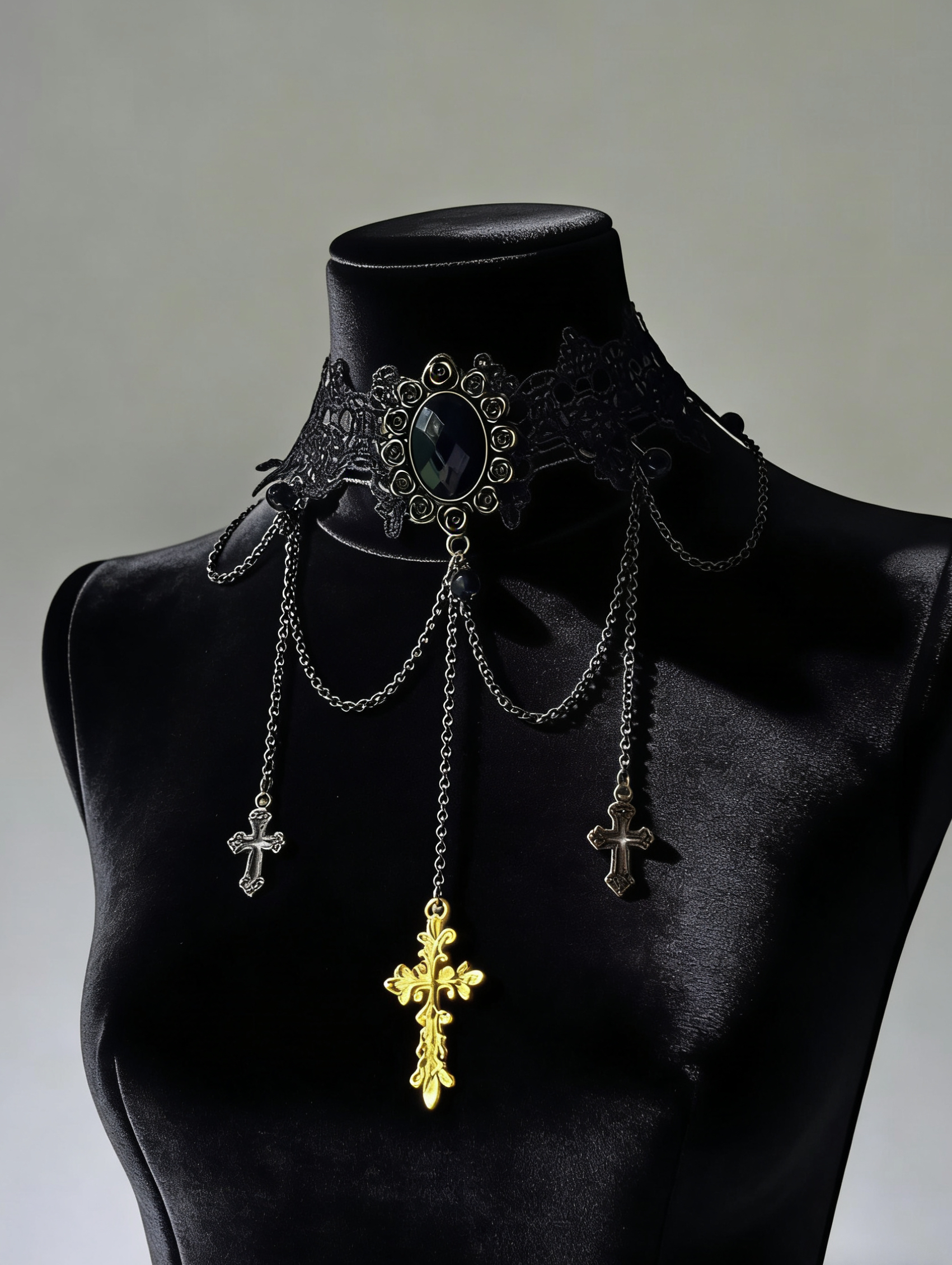
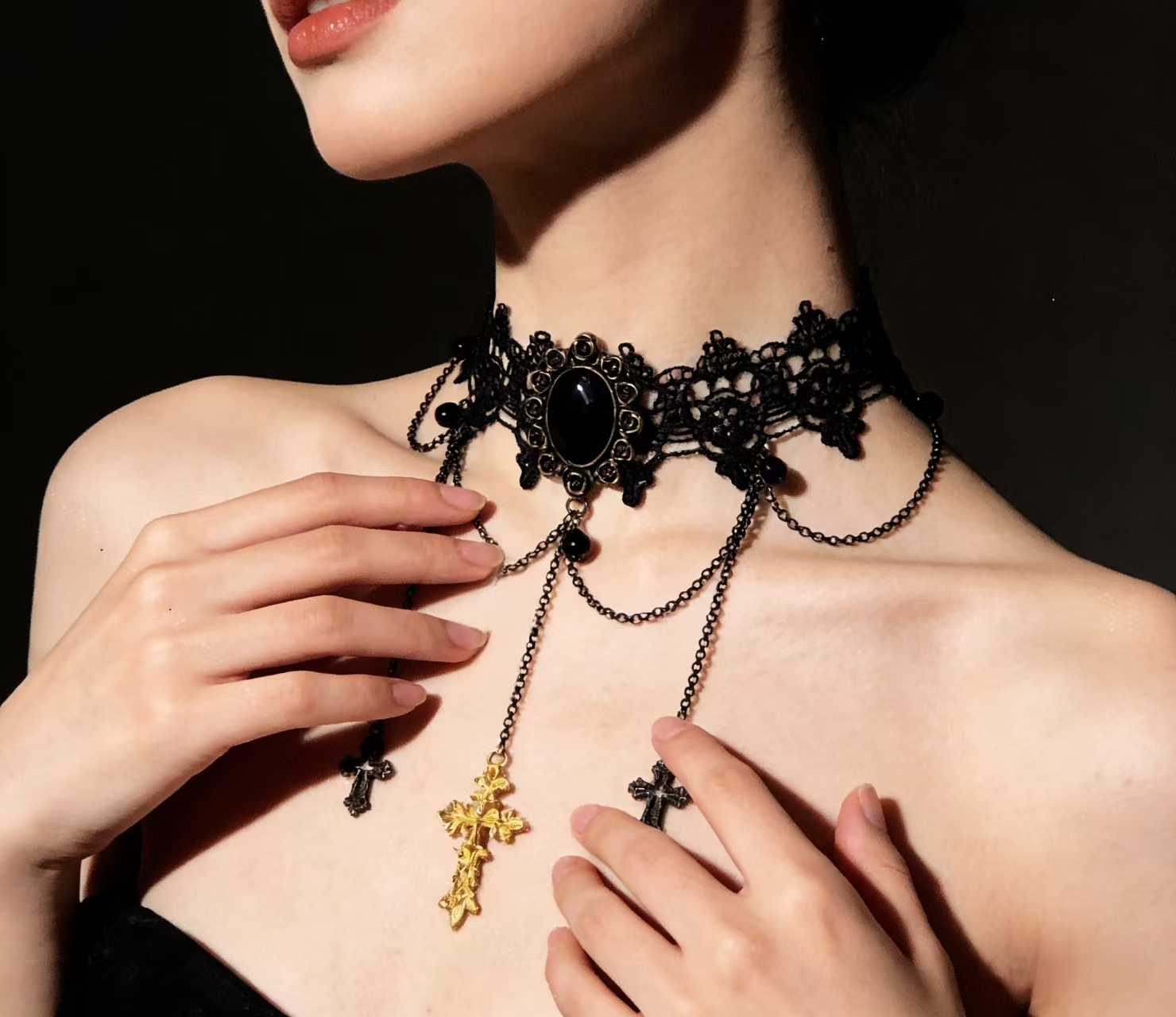
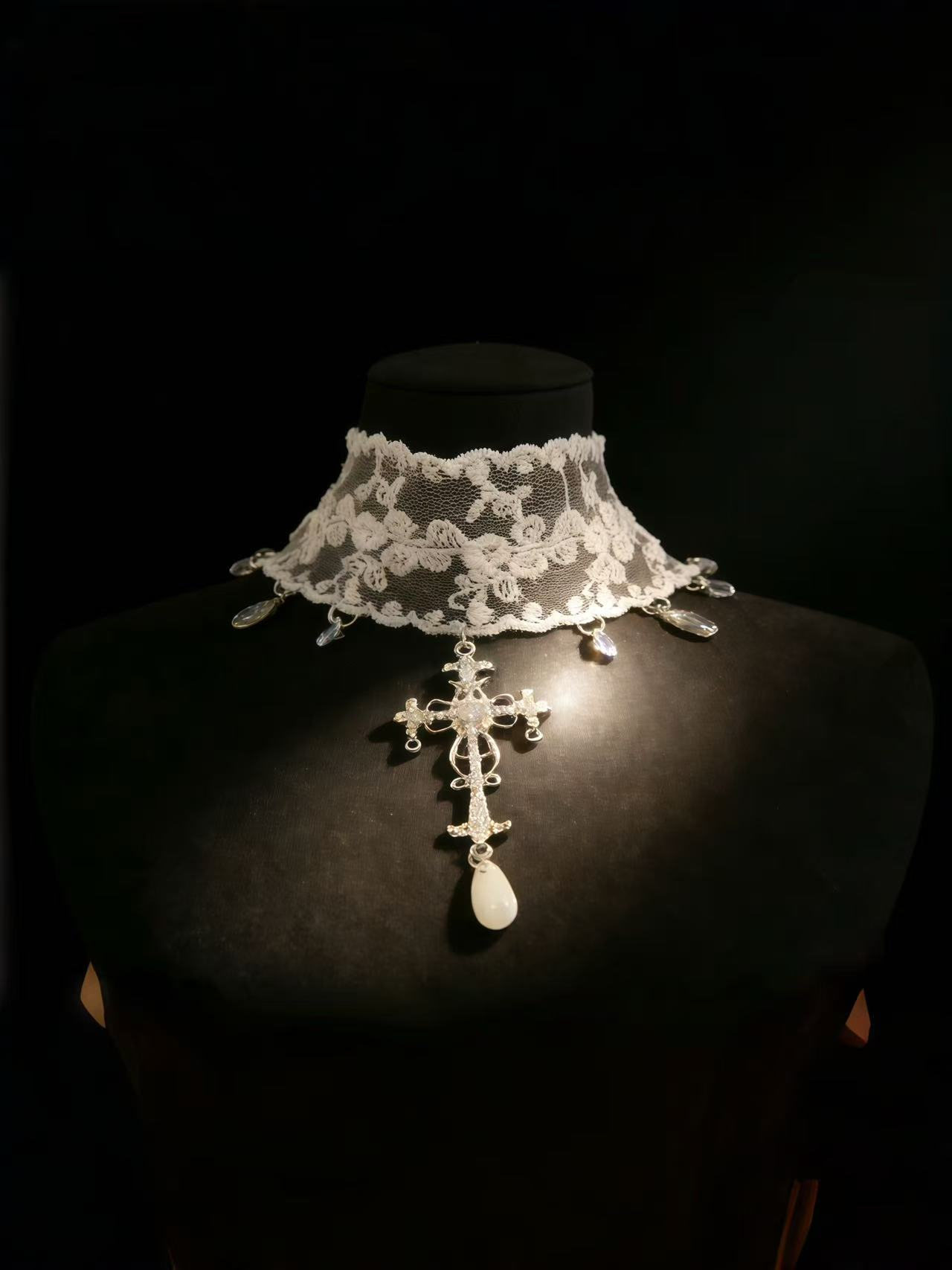
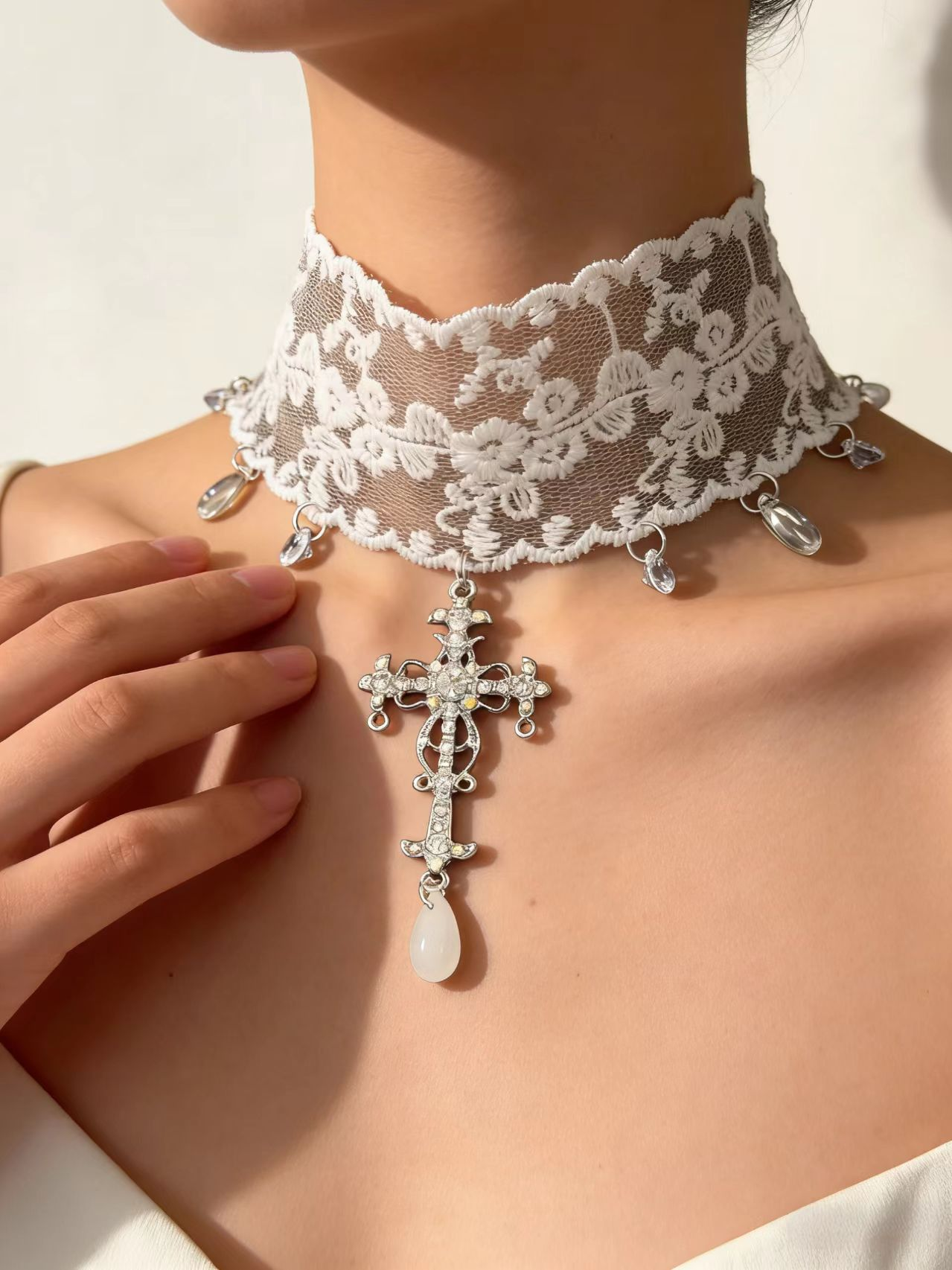
In 17th-century Flanders, Isabella and Ella were twin sisters. Isabella, gentle and devout, had a cross crafted from pure white lace and church crystal by her mother, which she wore to pray for the world; the lace flowed with sanctity in the morning light. Ella, sensitive and mysterious, had a cross crafted from obsidian and black lace from an ancient castle by her father, protecting her as she traversed the dark forests; the black gemstone concealed resilience in the night. The sisters were never separated, yet their personalities led them to guard different realms—Isabella's white lace cross soothed hearts, while Ella's black lace cross dispelled gloom. Years later, these two crosses were discovered simultaneously in the ruins of a church and a castle. Their designs were identical, differing only in color, becoming a legend of "twins of the same origin, each guarding their own domain," symbolizing the coexistence of light and introspection within humanity.
In 17th-century Flanders, Isabella and Ella were twin sisters. Isabella, gentle and devout, had a cross crafted from pure white lace and church crystal by her mother, which she wore to pray for the world; the lace flowed with sanctity in the morning light. Ella, sensitive and mysterious, had a cross crafted from obsidian and black lace from an ancient castle by her father, protecting her as she traversed the dark forests; the black gemstone concealed resilience in the night. The sisters were never separated, yet their personalities led them to guard different realms—Isabella's white lace cross soothed hearts, while Ella's black lace cross dispelled gloom. Years later, these two crosses were discovered simultaneously in the ruins of a church and a castle. Their designs were identical, differing only in color, becoming a legend of "twins of the same origin, each guarding their own domain," symbolizing the coexistence of light and introspection within humanity.